Page 1 of 1
928 DIY Section
Posted: Sat Nov 20, 2021 11:04 am
by dr bob
In a recent online life, I supported a pretty large community of 928 owners. Focus on diagnostics and troubleshooting, with quite a bit of DIY content as I maintained my own plus "clinic" cars that showed up at my home garage on weekends. Virtually everything done on those "clinic" cars falls into the same-day-duration window, so they are generally maintenance and care tasks rather than full restorations or engine/gearbox overhauls. I'm planning to spruce up a lot of my historical content so it presents better, maybe adopting some "standard" format, and share some of it in a future curated 928 DIY section here on Carpokes. As comments or questions on existing content are shared in the 928 forum, and when new candidate content is shared by members, the 928 DIY section will be updated to include that new content.
Greg Brown of Precision Motorwerx in Orange, California is a member here, and offers a wealth of 928 (and other Porsche) model knowledge from 40+ years with the cars. As our content grows, so too will membership and interest, with more model experts joining us along the way. If you have a question or problem that Greg can help with, flag the content with @Gregbbrd to get his attention.
I have a few small maintenance projects to do and document, and will post those initially in this forum. My winter-storage prep this year included such thrilling tasks as annual brake fluid replacement, and will soon add a timing belt replacement, plus some service due on ignition modules. The ignition modules are an easy but detailed task, and maybe that subject will be the kick-off posting.
Got a DIY question or experience? Share with the group here!
Re: 928 DIY Section
Posted: Sat Nov 20, 2021 2:38 pm
by Tom
Bob, this is music to my ears.

I've been mulling options for having DIY section for the 944 , which could be forum-based or maybe some other form of webpage accessible through the forum. Too many family things going on this week to focus on that, but I'm open to any/all ideas on format for community-generated DIYs....
Re: 928 DIY Section
Posted: Tue Apr 12, 2022 3:17 pm
by Zirconocene
@dr bob : Maybe a good place to start the 928 DIY section is with something related to cleaning of the ground points. Maybe also, not quite a DIY, but a guide to inspecting and replacing fuel lines.
If you ever feel the need to host a basket case for documentation purposes, I am sure my car can help.
Cheers
Re: 928 DIY Section
Posted: Wed Apr 13, 2022 2:52 pm
by dr bob
Good ideas on the ground points and fuel lines. Both are potential show-stoppers. For me, the ground-point cleaning is part of an annual electrical maintenance session, something that usually takes a couple hours all-in but at least so far has saved me 'almost' completely from gremlins.
My only "exception" has been a battery ground strap that was failing inside the sleeve. The symptom was presenting as a charging problem. I tested voltage drop through a bunch of components but somehow the weakened battery strap went undetected. It was finally replaced after reading of others with the problem, and suddenly all was well again in electric-ville.
On the fuel lines... Just Replace Them All. Way too many 928's have been car-be-qued because of old failing fuel hoses. My car is closing on 35 years since built, and got all new hoses at about 25 of those years. I do question some of factory material and routing choices, and upgraded where better materials are now available.
I also did a prophylactic fuel-pumps change about a year ago, because I had accumulated all the pieces and was tired of looking at them all the spares cabinet. Figured I might as well just store them on the car. Then... I noticed the current cost of the in-tank pump. The old one was then very carefully cleaned and pickled in ATF for preservation and maybe to fund a year at college for someone's dog. Yowza! Balancing that is the reminder that we are maintaining what were originally very expensive cars that only fell off a market cliff when their owners chose not to do the required maintenance on them. The market is slowly gaining an appreciation for them again, at least the cars that avoided and/or survived the 'many cheap owners' experiences well.
The Good News is that new and good used parts are still available for most of the car. I've been carefully hoarding some of the parts that have since become scarcer, like those fuel pumps and radiators and such.
There's always something to do on the 928. Boredom certainly isn't a problem around here.
Re: 928 DIY Section
Posted: Fri Oct 13, 2023 5:59 pm
by Periokid
@dr bob and @Gregbbrd
I have a DIY question. I have a 1986.5 928S. I has some electrical gremlins that require the replacement of the ignition switch. Do you have any instructions on how to change the switch? It is pretty tough getting to the top screw in particular. Maybe you have some tricks or a description of the process to change the switch. Thanks. David
Re: 928 DIY Section
Posted: Fri Nov 03, 2023 1:22 pm
by Autobreza
A right angle ratcheting screwdriver may work on the lower screw. here is a helpful link:
https://forums.pelicanparts.com/porsche ... ement.html
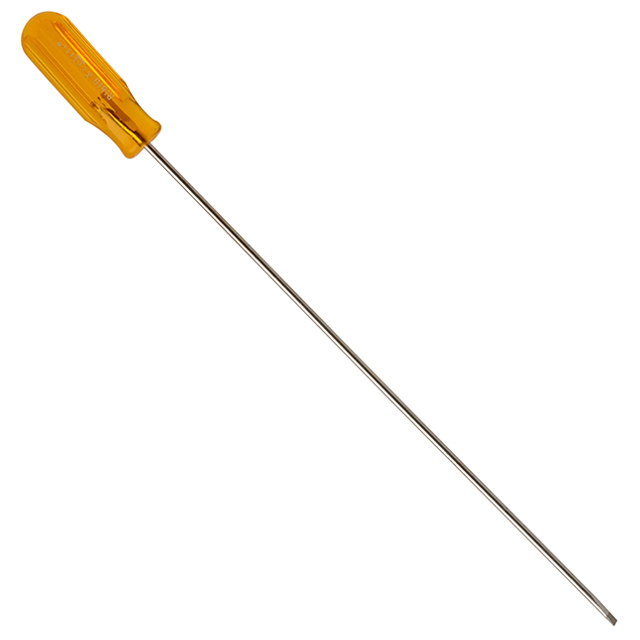
On my 944 I could access the lower screw with a small or pocket screwdriver and the upper screw with a long (12" or so) very thin blade screwdriver which I was able to finagle under the dash to reach the screw.
Re: 928 DIY Section
Posted: Fri Nov 03, 2023 1:41 pm
by Periokid
Thank you. I resorted to removing the gauge pod. A bit of work but I was successful.
Re: 928 DIY Section
Posted: Tue Nov 07, 2023 12:04 pm
by dr bob
Sorry I'm late. The factory recommendation is to remove the bolts holding the gauge pod from underneath , as you did, and raise it up to allow access to the screws holding the switch to the back of the lock cylinder on the steering column. Also helps a lot to remove the steering wheel and cover to lower the column some from it's support. A right-angle ratcheting Phillips screwdriver makes the job a little easier/faster than using just a right-angle Phillips tool when it comes to those three that hold the switch in place.
For others playing along at home:
I was chasing an electrical gremlin that initially pointed to the ignition switch as a probable cause. Eventually that symptom was solved with a new X-relay. If you are chasing lighting and other X-bus clients in the car, or with apparent starter issues, invest in some good replacements for those relays before going after the ignition switch itself. Long-time 928 International sage Jim Bailey shared a motto of "relay-relay-relay" as logical first steps in troubleshooting new electrical symptoms in the cars.
Reminder that X-bus clients are powered with key in "run" position II. Most but not all are supplied by the X-relay. So when you start seeing erratic lighting issues for instance, that X-relay is any easy and inexpensive test-replace diagnostic. In earlier cars, the X-relay isn't connected to the X contact in the ignition switch; rather, the relay coil sits in the circuits between the ignition switch 15 and 50 (ignition and starter) contacts to achieve a similar function. For more possible confusion, note that the X-relay is NOT the relay in position X in the central-electrics panel. Look at your own particular year's CE fuse and relay diagram to find where it's placed in your car.
To add to the relay-relay-relay guidance I'll echo another community recommendation about cleaning battery terminals and ALL the ground points in the car before going deeper into symptom-specific diagnostics. Good relays are relatively inexpensive, at least the common 52 type. Cleaning ground points is a regular PM task, with 'regular' determined a lot by the climate where the car has lived. I do a whole electrical service -almost- annually, more typically every two years. The car has lived in dry desert climates all it's life, so seems less troubled by corrosion at those ground points. In the giant scheme of electrical things that might affect my 35 year old toy, relay-relay-relay (X-bus, fuel pump, and LH/injection in my case), along with a new battery ground strap, have solved them all. I've only been stranded once in all these years, and that was caused by a failing fuel pump relay at the bottom end of my own driveway. Solved quickly, I might add.
More TL;DR fun: My '89 S4 has a parasitic electrical drain of about 25ma, typical for the keep-alive memory in the engine controllers and the radio. During its first decade or so, I used the car at least weekly to get to my office, and for weekend touring. Batteries suffered some from that parasitic discharge, and wouldn't crank briskly if I was gone for more than a couple weeks on a project. By a month, it would barely crank and start. So a battery maintainer was added to the 'pre-storage' protocol even if it was just for a few days. The strong and fully-charged battery seems to eliminate a slew of obscure low-voltage symptoms that many report. The last battery managed to live past nine years even with the draw-to-dead abuse, thanks to religious smart-maintainer use.
I started off with a relatively inexpensive Schumacher on-board 1.5A maintainer I already owned, but changed to a CTEK US7002 later after an episode related to moving to Oregon from SoCal. I drove the car here a few weeks in advance of the "big move" and left it in the garage. Keys with the contractor so he could move it to the driveway if they needed the garage space. I grabbed the registration paperwork from the glovebox to deal with the local DMV, and somehow the glovebox door was not closed tight. The light stayed on and the battery ran down, not discovered until we arrived with furniture and more importantly all the garage equipment.. The mighty 1.5A unit took several days plus to restore the battery charge. The US7002 CTEK is the generic 7+ amp unit that gets rebadged by Porsche and M-B, and has been good enough that there are now three of them placed strategically to support the lesser-used cars here at our new World Headquarters home.